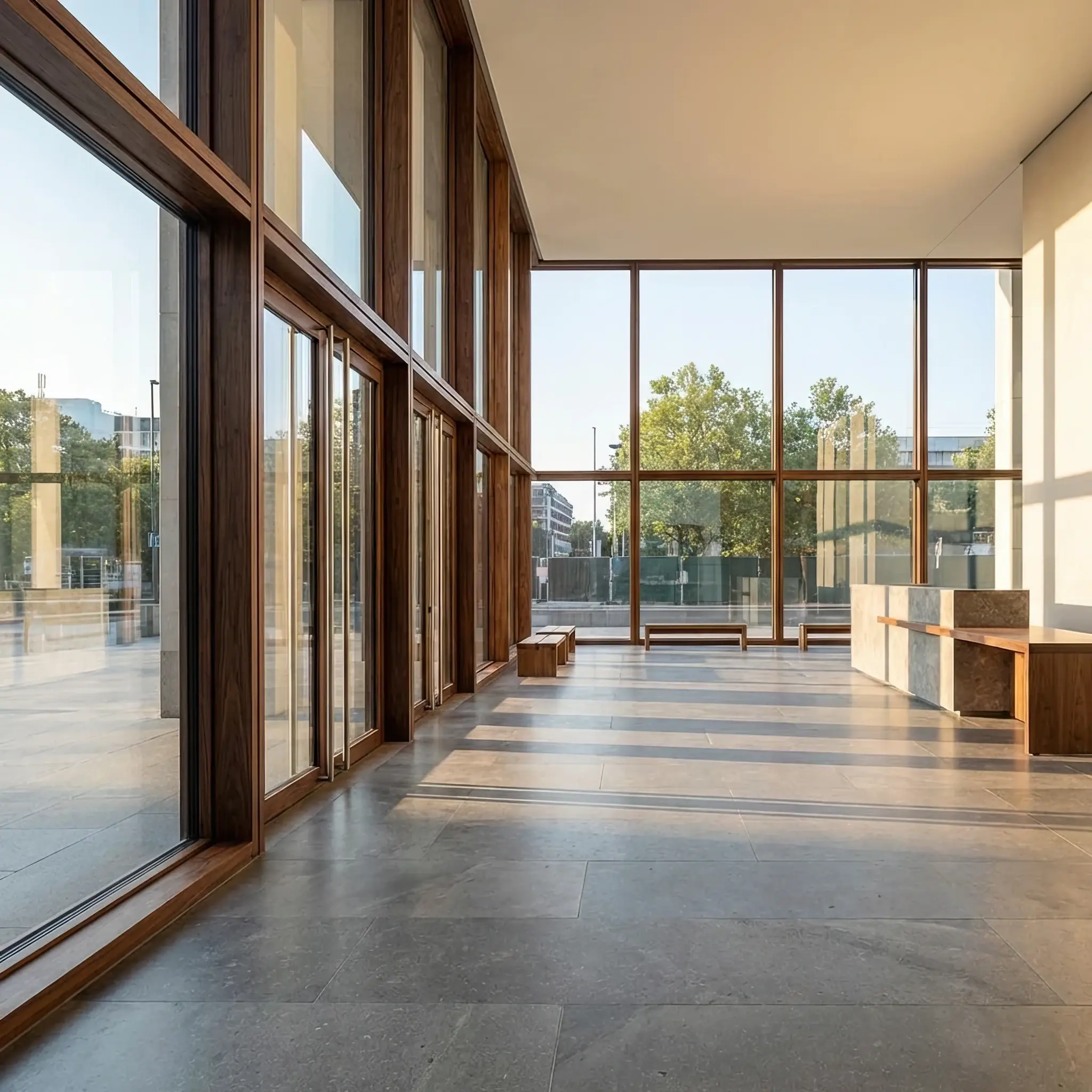
In 2026, lobby windows have stopped just letting light in—they've started collecting it. We present Transparent Solar Concentrators—a technology that turns ordinary glass into an invisible solar panel. At Reception Space, we integrate these systems into lobby glazing, allowing the building to independently power itself without compromising on aesthetics. We explore how photonics makes the facades of the future active participants in the energy system.
Invisible Generation: How Does It Work?
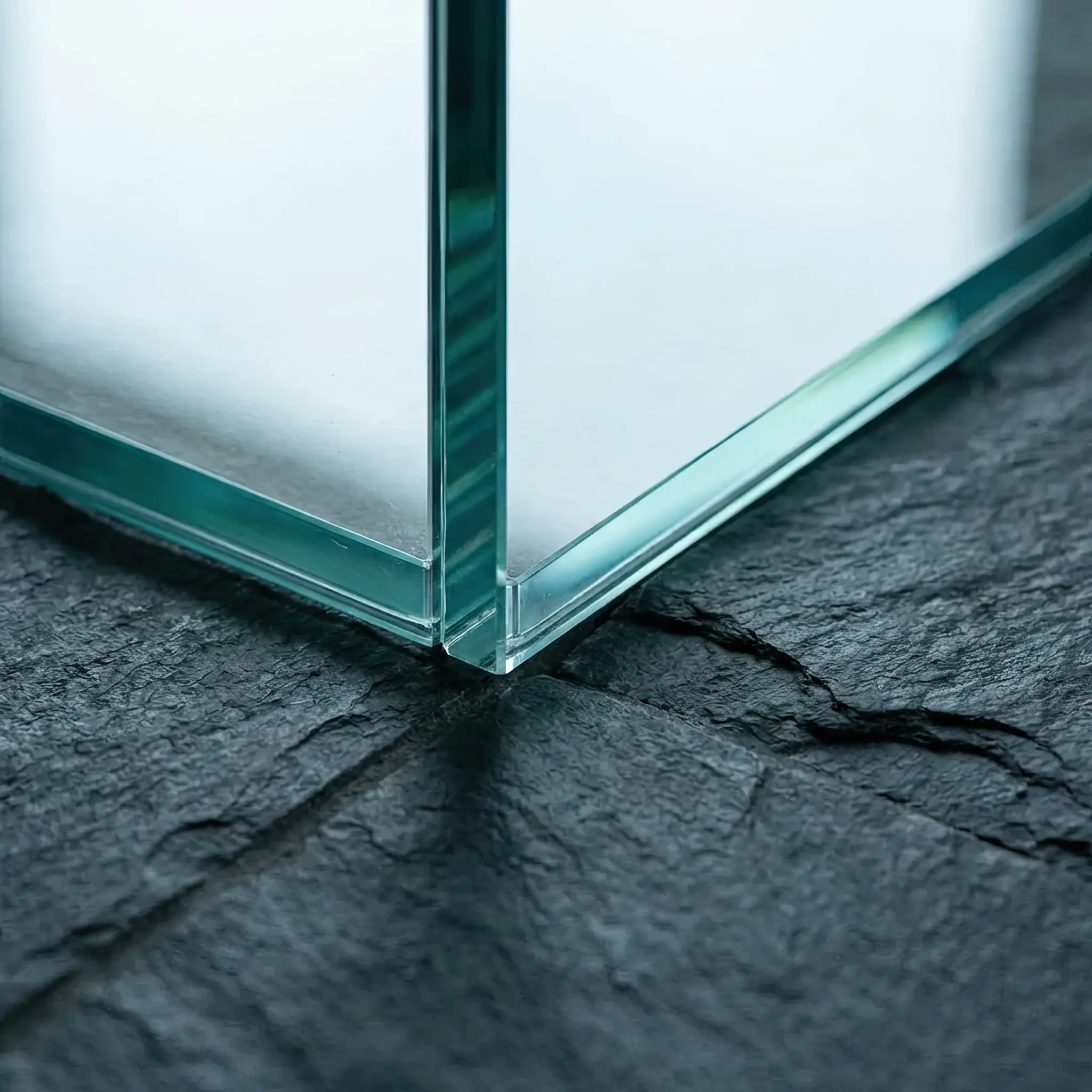
2026 technology is based on Luminescent Solar Concentrators (LSCs). A special layer inside the glass unit absorbs only invisible parts of the spectrum (UV and near-IR), redirecting their energy to the edges of the frames where high-efficiency photocells are hidden. Meanwhile, visible light passes through the glass unimpeded. To a visitor of a Reception Space lobby, it looks like an ordinary, perfectly transparent window, but behind this calm lies a powerful energy process.
The Autonomous Lobby: Energy from Light
The facade as a power source
In 2026 projects, the glazing of an average-sized lobby can generate up to 15-20 kWh of energy daily. This is enough to fully power all lighting, automatic door systems, and registration terminals. At Reception Space, we create completely autonomous entrance groups that do not depend on the city grid during daylight hours. This is not only a saving but also a guarantee of uninterrupted operation for the building's key systems in any situation.