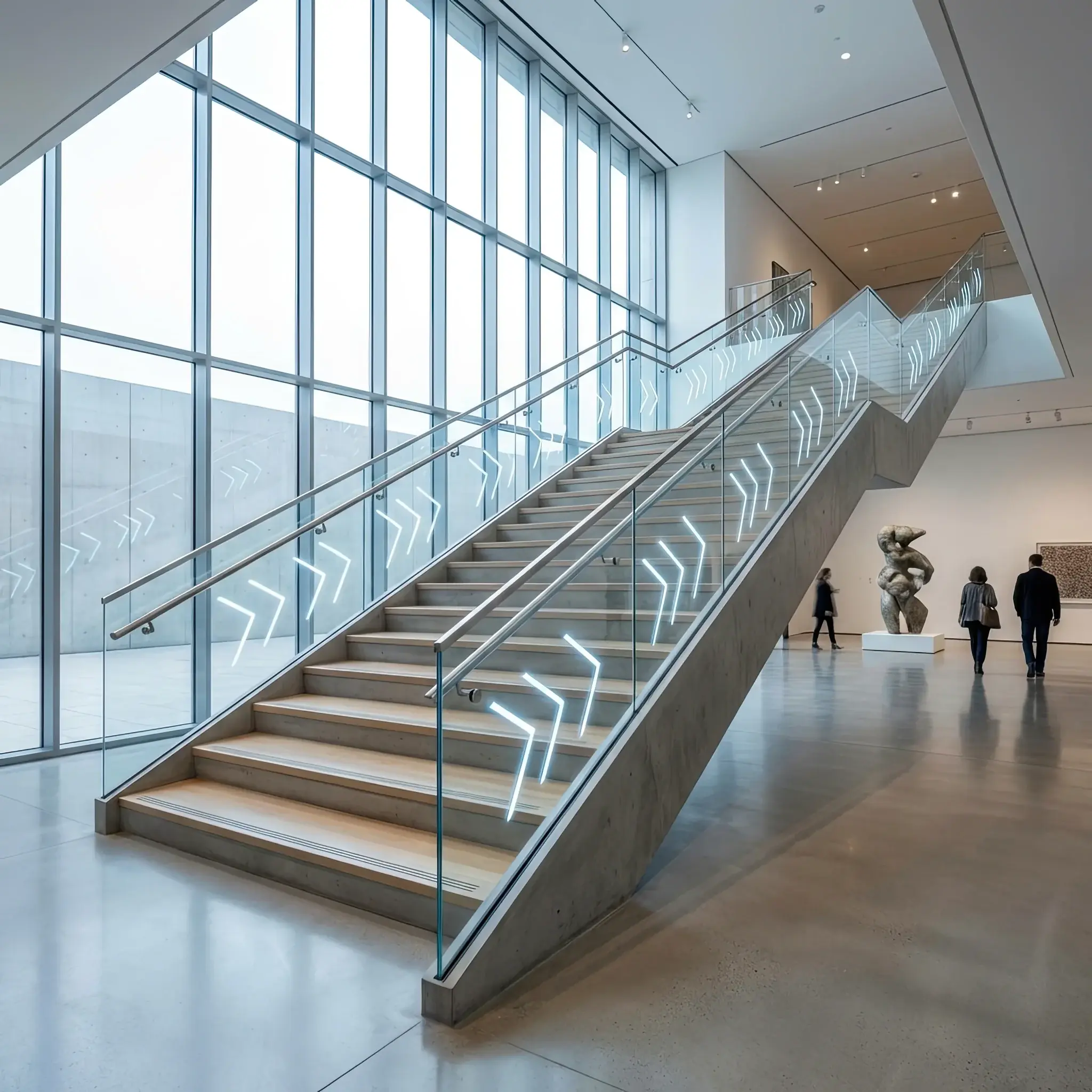
In 2026, the black rectangles of monitors on an administrator's desk are bad form. The future belongs to Transparent OLED (T-OLED) technology. These are transparent displays we embed directly into glass reception facades. They allow for broadcasting information — from greetings to stock quotes — right 'in the air' while maintaining the space's visual lightness. We examine the power of this tool and show how it changes the rules of premium service.
Transparency as a Function: Why is it needed?
A traditional screen is a barrier. Transparent OLED removes the wall between the administrator and the guest. You see the person standing behind the desk, while a layer of digital data floats between you. In an inactive state, it's just glass (up to 40-50% transparency). Upon activation, it transforms into a bright, rich display with the infinite contrast inherent to OLED technology.
Design Integration: Layer by Layer
Screen Architecture
We mount T-OLED panels within multi-layer triplex glass. This protects expensive electronics from accidental impacts and dust. All cables and control units are hidden in the desk's narrow metal frames (portals). In 2026, we use this to create a 'digital aquarium' effect or an interactive showcase where real objects behind the glass are supplemented by graphics on its surface.