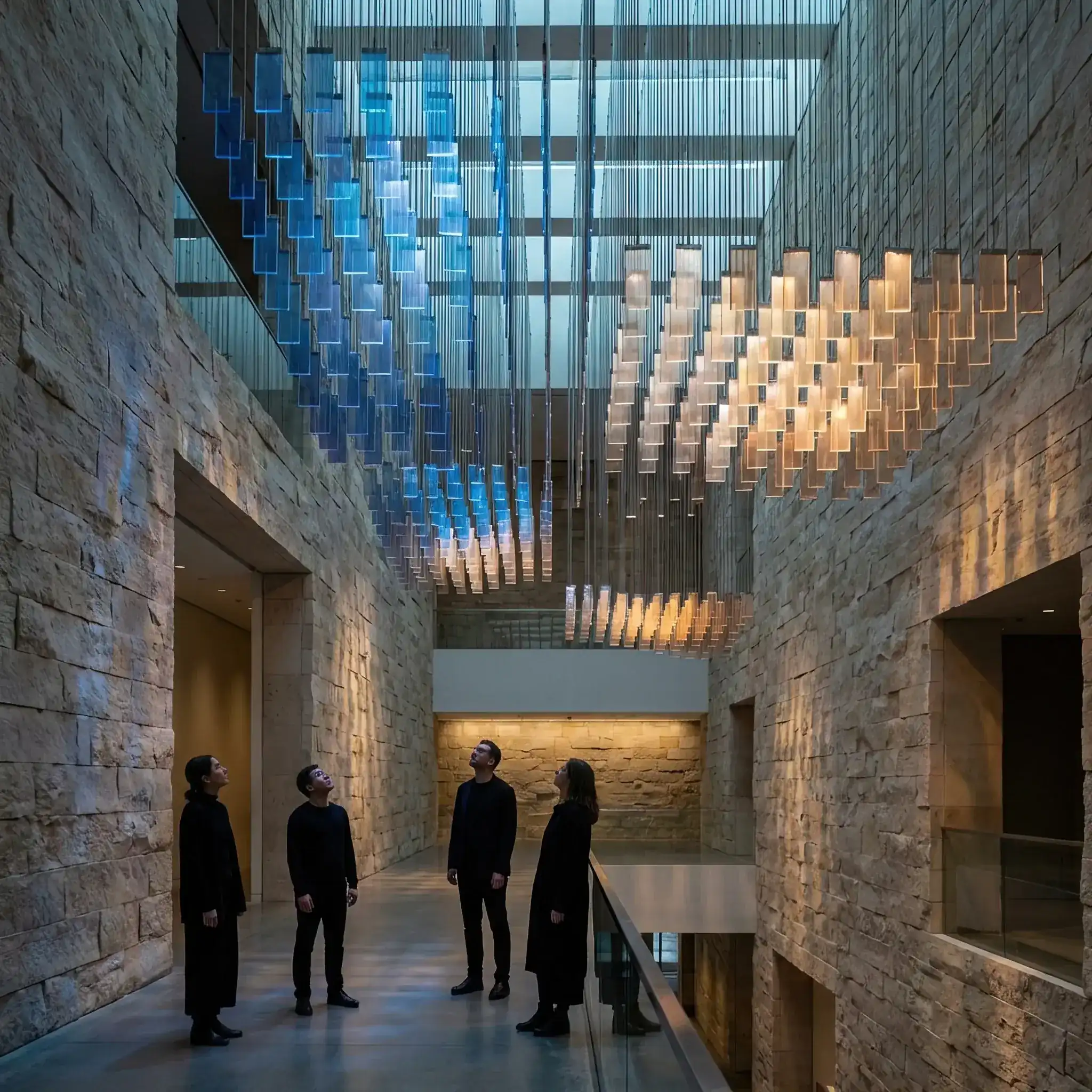
In 2026, light has learned to empathize. We present Neuro-Adaptive Lobby Lighting—systems that read a space's emotional background and adjust it in real-time. At Reception Space, we integrate AI facial expression analyzers and biometric sensors that allow lobby light to 'calm' agitated guests or 'invigorate' tired ones. This is the peak of user experience personalization. We explore how photons control happiness hormones in your building.
Emotional Tracking: Light That Sees Feelings
2026 technology utilizes non-contact detection of micro-expressions and breathing rates. In a Reception Space lobby, lighting smoothly adjusts to the state of an arriving person. If a guest looks tense after a flight, the light in their area shifts to a warm amber spectrum with low intensity, promoting cortisol reduction. This happens imperceptibly, on a subconscious level, creating an instant sense of safety and comfort. We are programming an atmosphere of success.
Circadian Rhythms 2.0: Biological Harmony
Syncing with internal clocks
In 2026 projects, neuro-lighting from Reception Space does more than mimic the sun. The AI system analyzes the time zones of arriving guests (via registration data) and creates 'light portals' for soft adaptation to local time. In the morning, light contains more 'blue' spectrum to block melatonin, while in the evening it transitions into a soft golden glow. The building literally helps a guest's body enter the correct rhythm, minimizing the effects of jet lag.