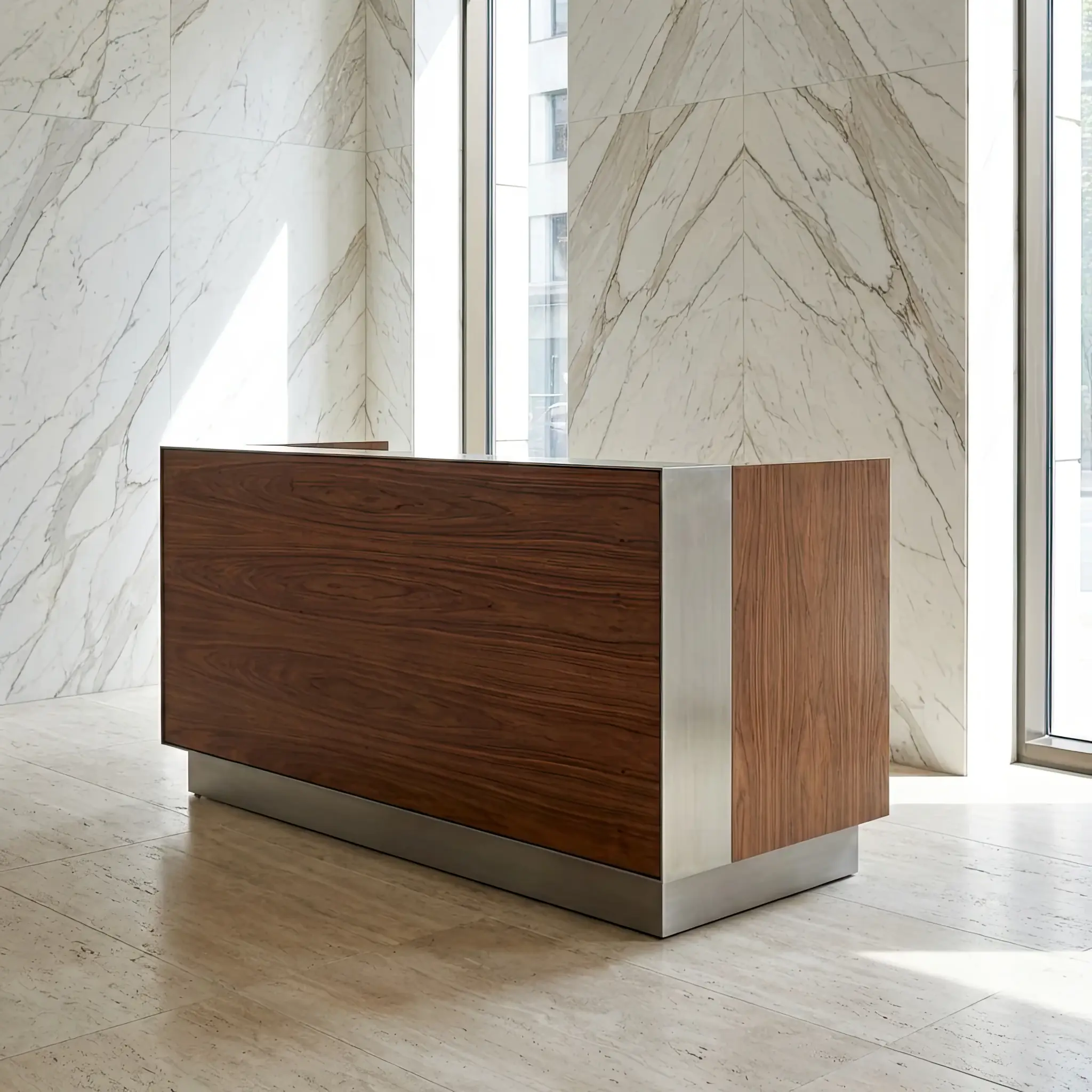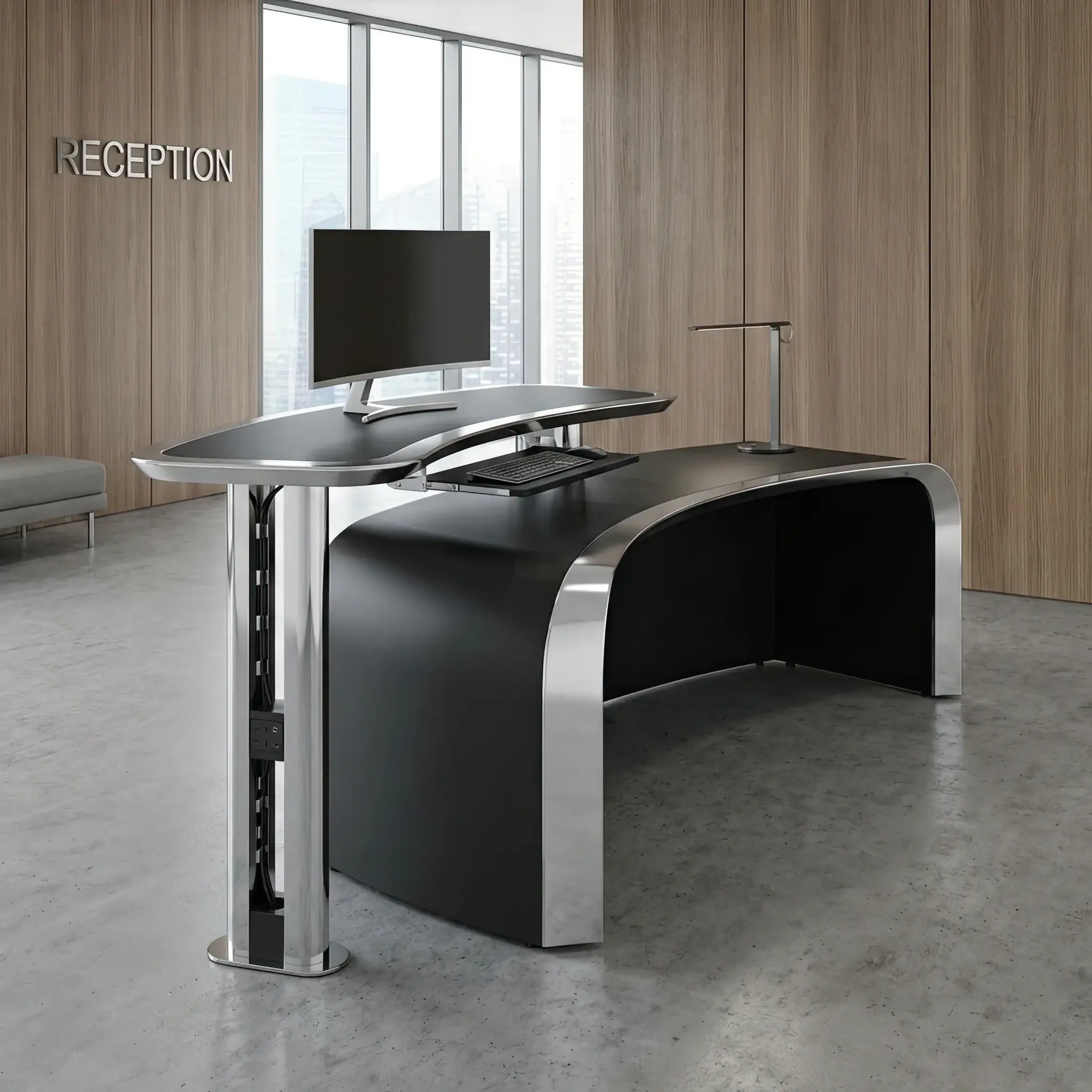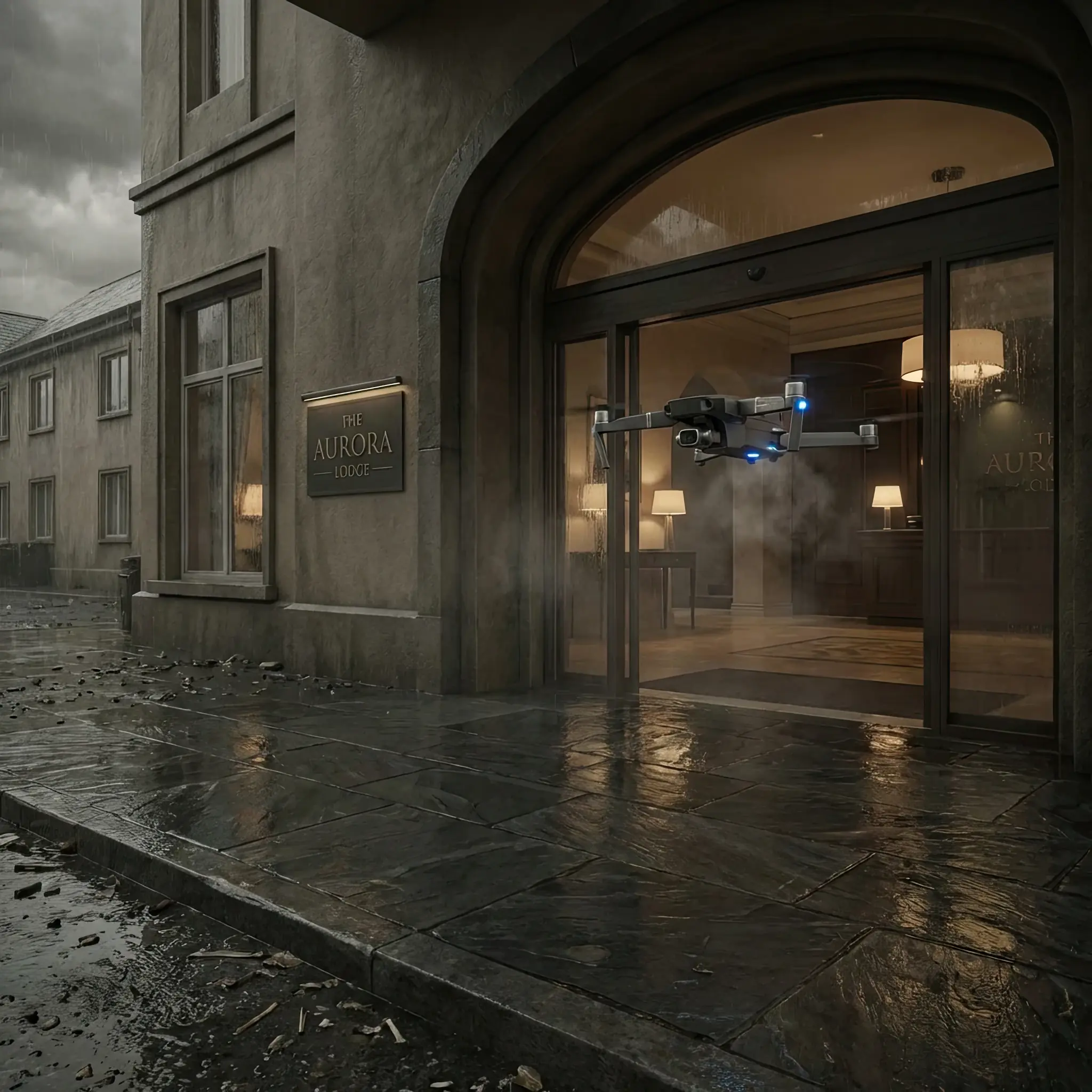
In 2026, light becomes invisible. Fiber optic lighting technology allows us to output millimeter points of light directly through material surfaces: natural stone, wood, or premium textiles. This creates a 'starry sky' or 'digital rain' effect impossible with standard LEDs. We examine how micro-engineering creates macro-impressions, turning the reception into an art object of planetary scale.
Fiber Magic: Light Without Heat or Current
The primary advantage of fiber optics is that there is no electricity in the fibers themselves. The light source (projector) is located within the desk body, outputting only thin glass or polymer threads (0.25 to 1.5 mm). This makes the technology ideal for integration into stone slabs or veneers: materials don't heat or delaminate, and light points look natural, like gemstone inlays.
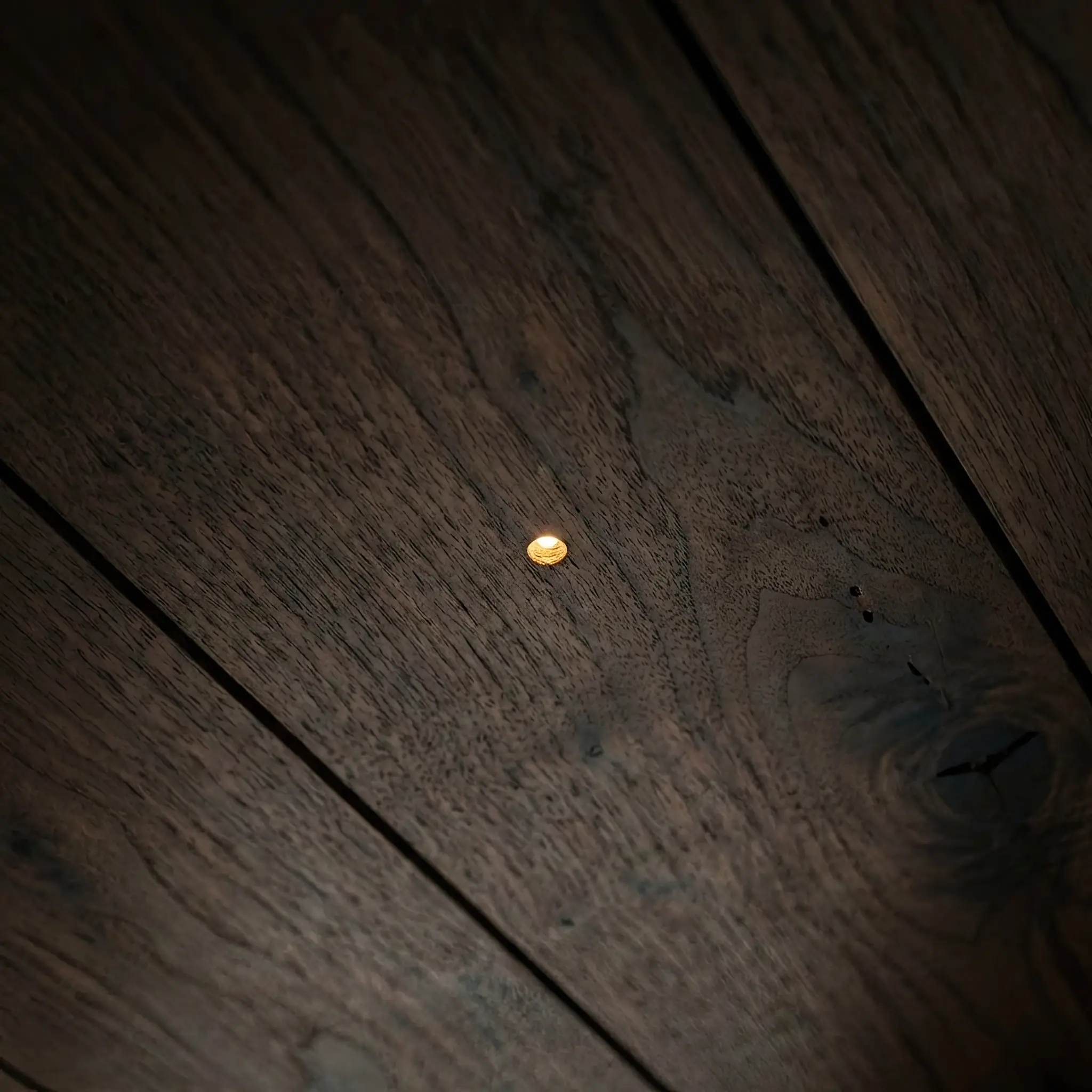
Stone Integration: 'Light Stone' Technology
Light Through Matter
We drill thousands of micro-holes in stone facades via laser or high-precision CNC. An optical fiber is inserted into each hole, then polished flush with the surface. When off, it's a monolithic stone wall. But press a button, and the desk 'ignites' with constellations. In 2026, we use this to broadcast company logos or navigation prompts that seemingly 'grow' through the granite.