In 2026, color has ceased to be a static pigment. We have transitioned to structural color, borrowed from nature. Dichroic glass is a material that isn't just painted but engineered at the molecular level to manage light. In this article, we examine how using dichroic panels in the reception zone creates a dynamic interior without a single LED.
The Physics of the Chameleon: How Dichroism Works
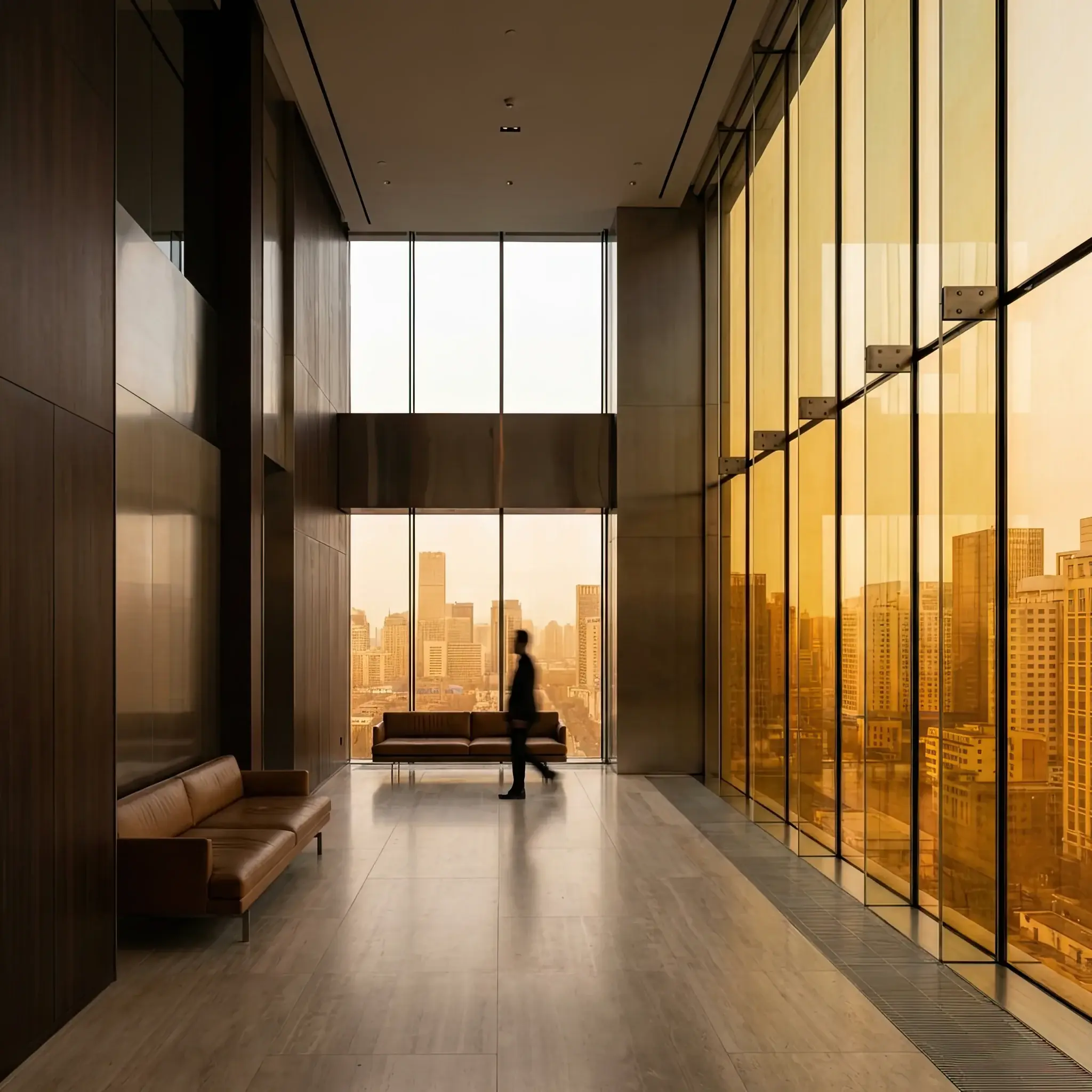
Dichroic glass is manufactured by vacuum-depositing ultra-thin layers of metals and oxides (gold, silver, titanium). These layers are so thin that they don't block light but cause it to interfere. As a result, the glass transmits one spectrum of colors and reflects another. When you walk past such a reception desk, it literally 'comes alive', changing color from deep indigo to bright amber depending on your viewing angle.
In 2026, we utilize multi-layered dichroic triplexes that allow us to program the color transition at the glass production stage, creating unique gradients for every project.
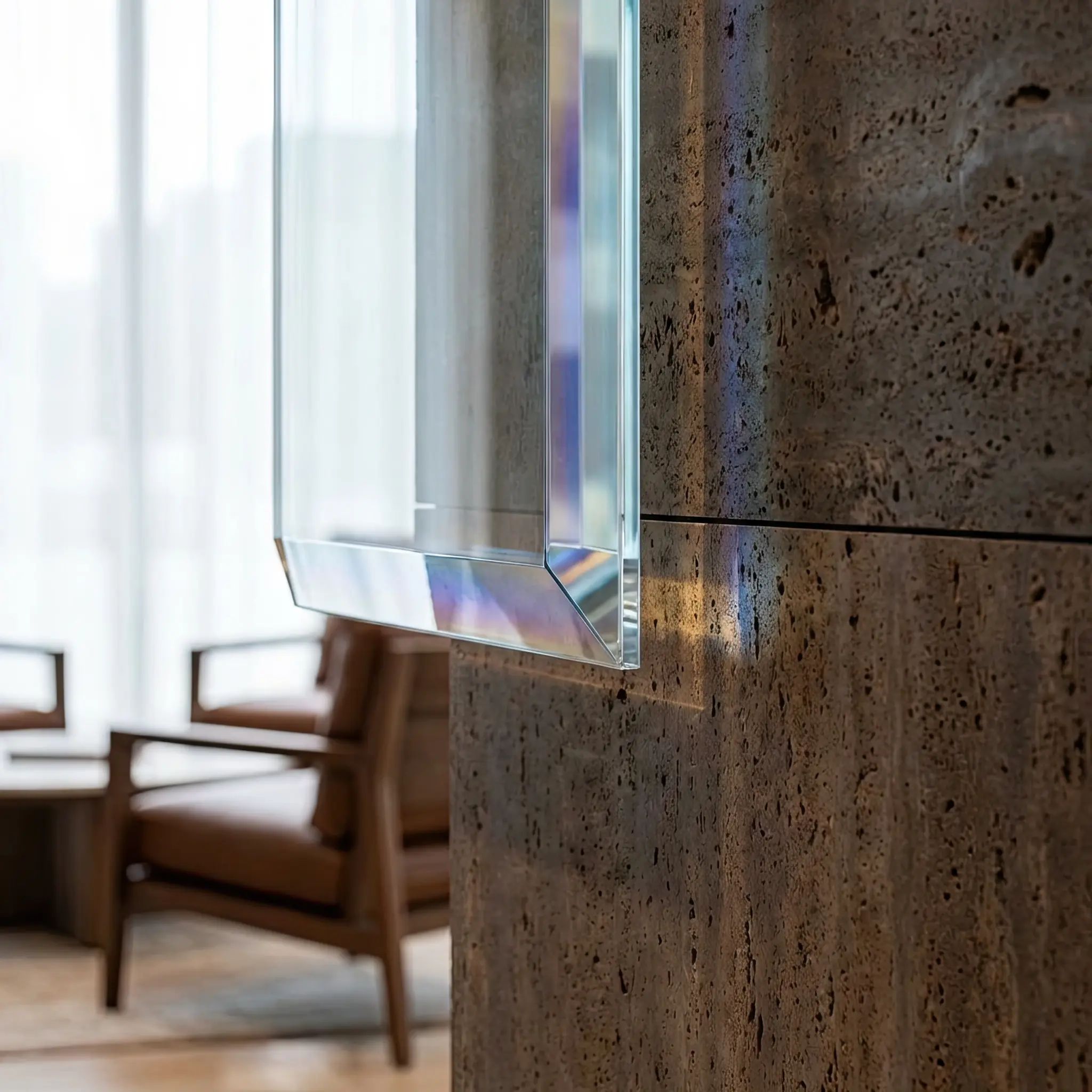
Design Applications: From Accents to Art Objects
Light Portals and Partitions
We use dichroic glass to create partitions behind the reception desk. This allows for space division without clutter. Due to the play of light, such a partition appears immaterial, constantly changing, making it perfect for tech and creative companies.