In 2026, the office is no longer a place where everyone has a dedicated desk. The hybrid work model has made Desk-Sharing a global standard. This solution allows companies to save up to 40% of floor space but requires refined spatial organization. We examine how the reception transforms into a 'Landing Zone' — the place where employees start their day, book a desk, and sync with the team — and why entrance group design is critical for flexible office productivity.
Landing Zone: Reception as Control Center
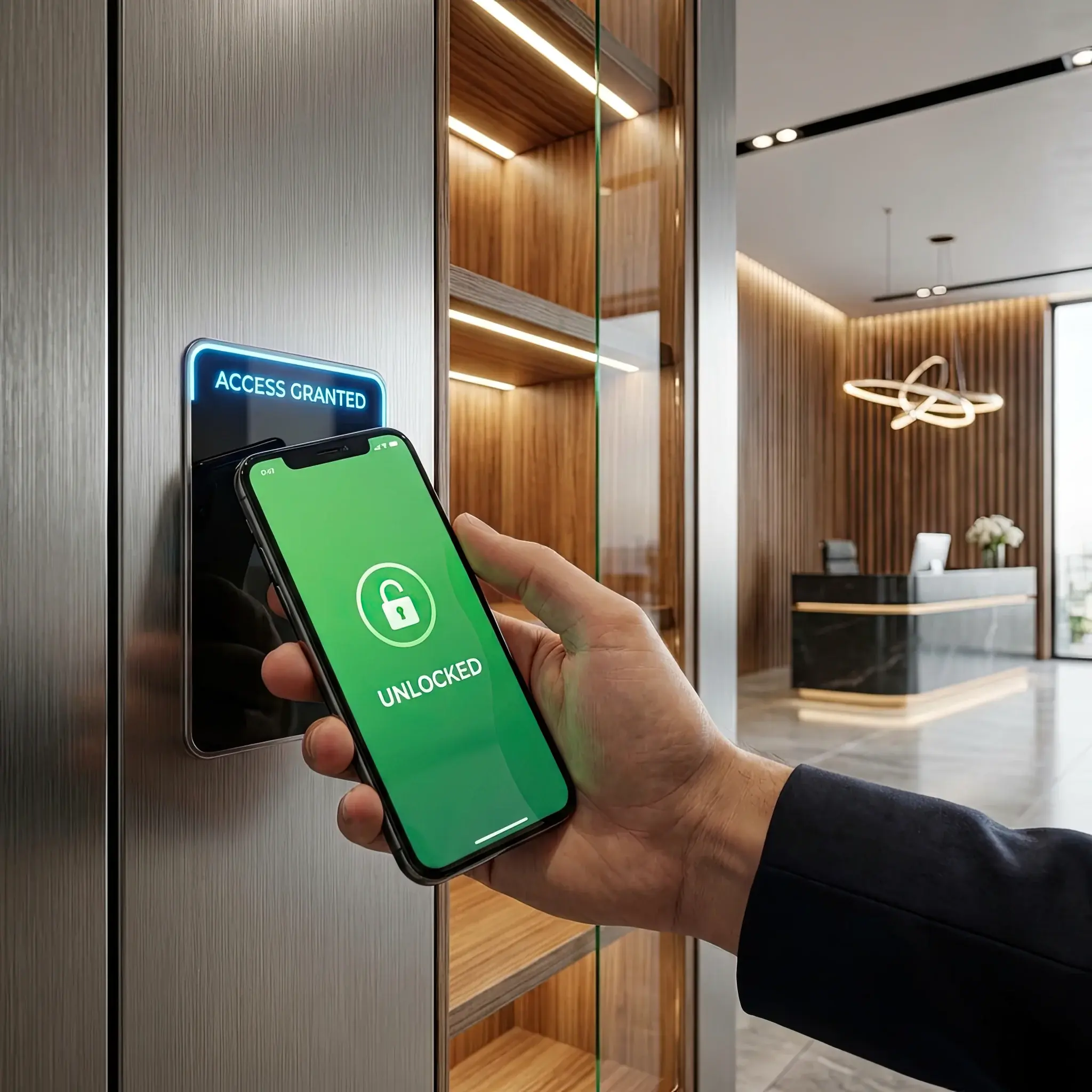
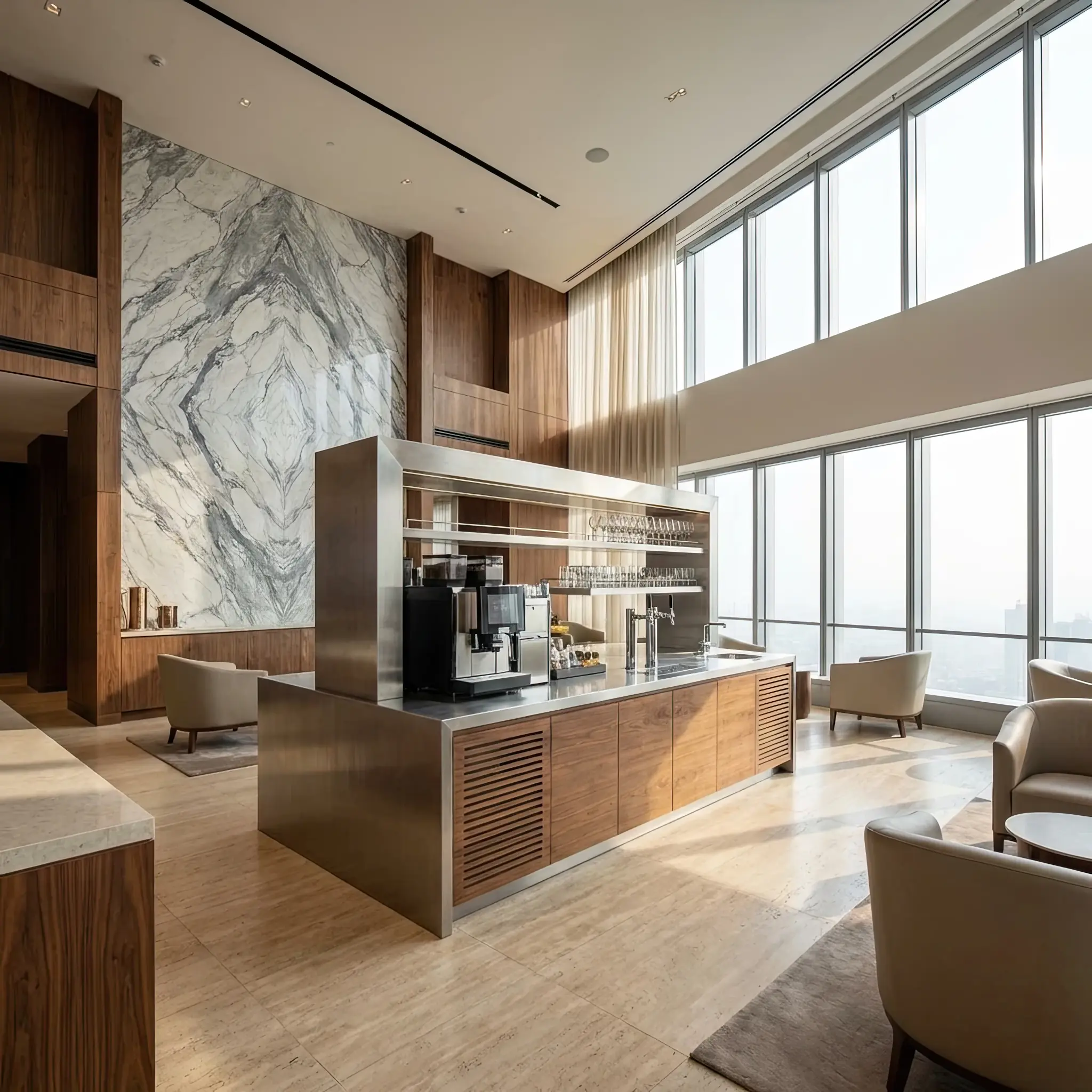
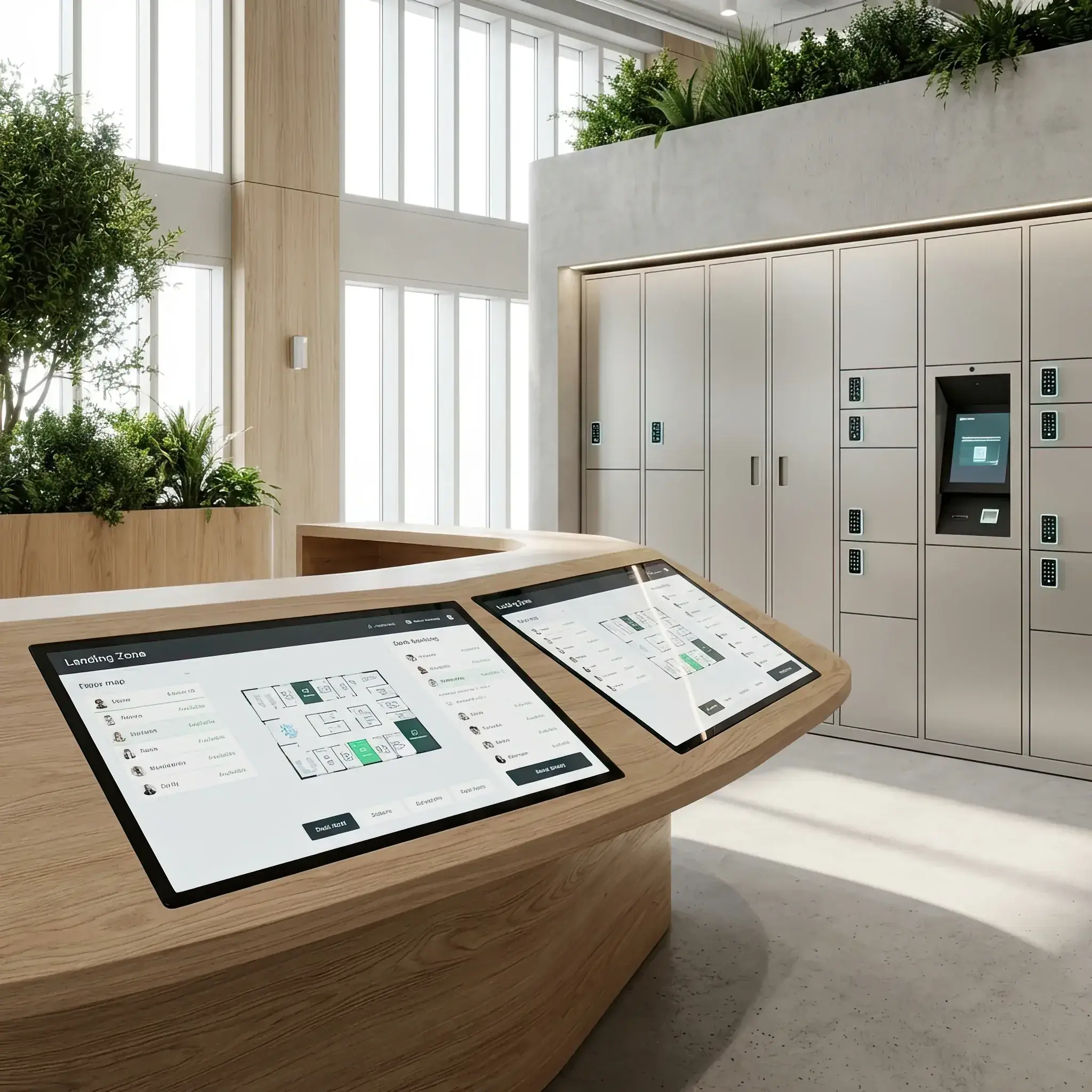
Under a Desk-Sharing system, an employee enters the office without a dedicated desk. The reception becomes the entry point into the ecosystem. Interactive kiosks with office maps display real-time availability. Desk functionality expands: administrators now assist staff with orientation, issue temporary passes, and manage IT peripherals. This transforms the reception into a service hub for the company's internal clients.
The Psychology of Flexibility: From Ownership to Experience
Absence of 'One's Own' Corner
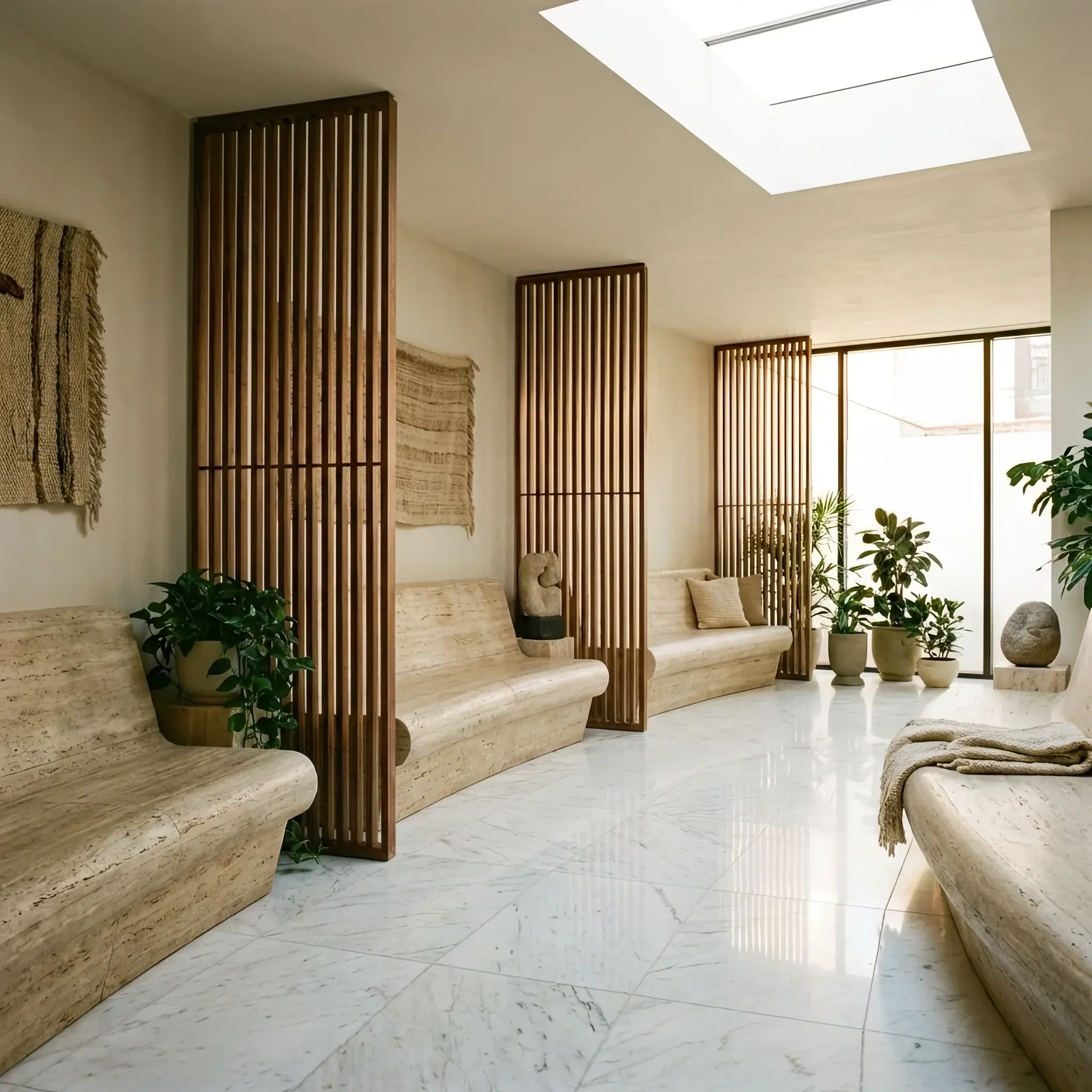
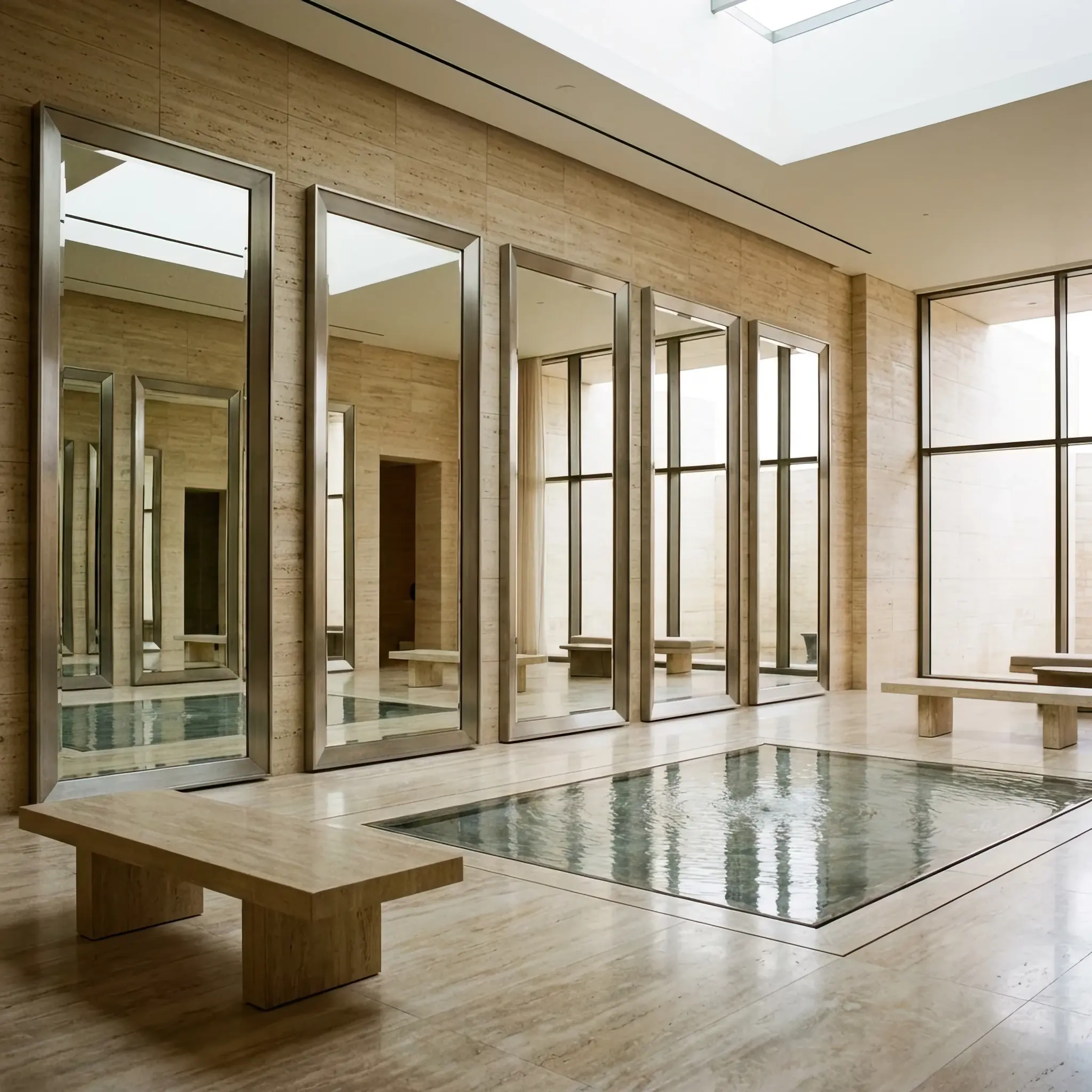
The main challenge of Desk-Sharing is the psychological discomfort of lacking a personal desk. We address this through lobby design. The reception zone must broadcast a sense of stability and brand belonging. Utilizing company heritage artifacts, branded scents, and soft lighting in the welcome area creates a psychological 'anchor'. Employees feel at home anywhere in the office if the entry point (reception) is designed correctly.