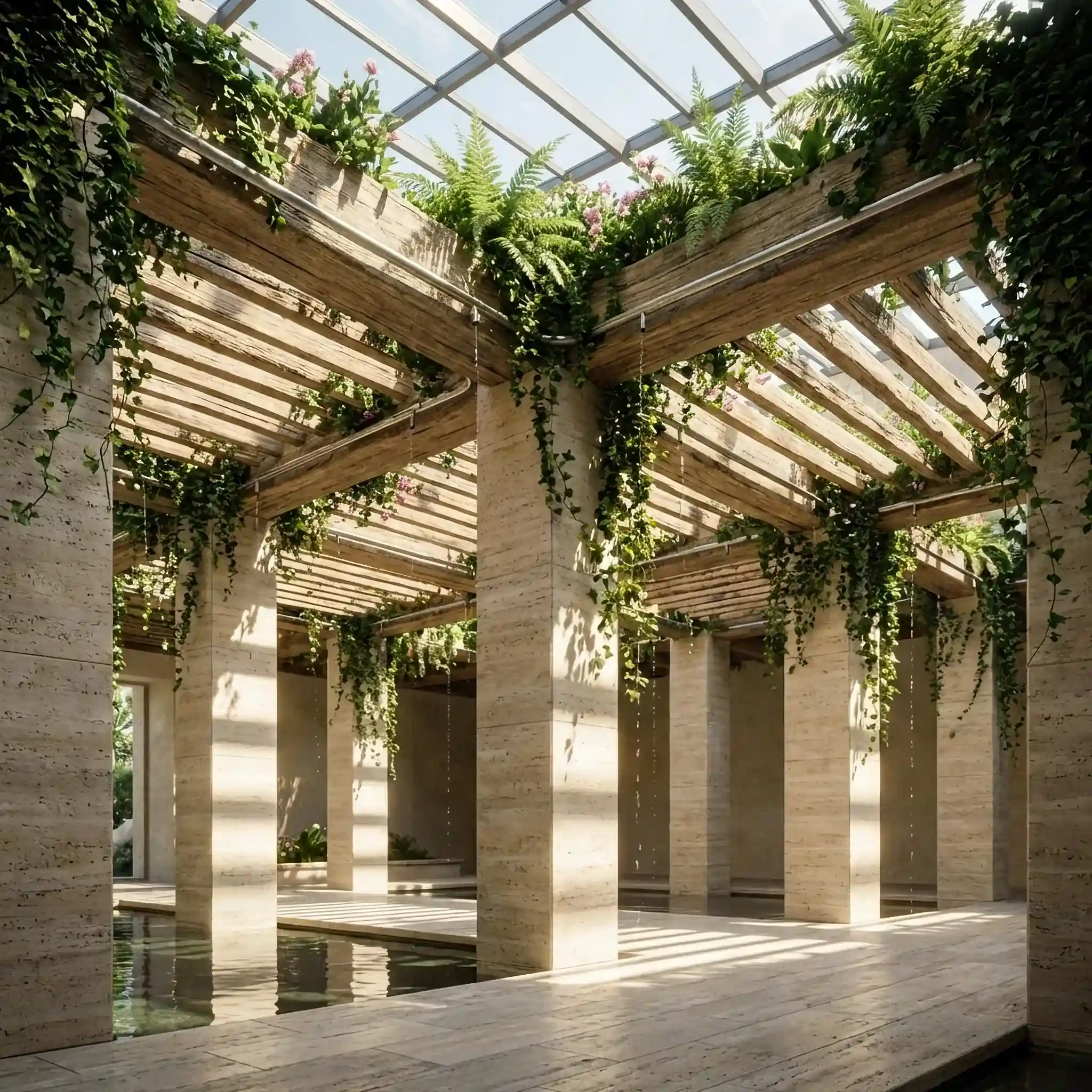
In 2026, the boundary between biology and architecture has finally blurred. Bio-integrated architecture is not just 'greening'—it is the creation of buildings whose elements consist of living organisms: from mycelium and algae to genetically modified plants. We examine how a living lobby self-regulates its climate, purifies the air, and creates a unique biophilic environment that radically changes the well-being of employees and guests.
Building as an Organism: The Philosophy of Symbiosis
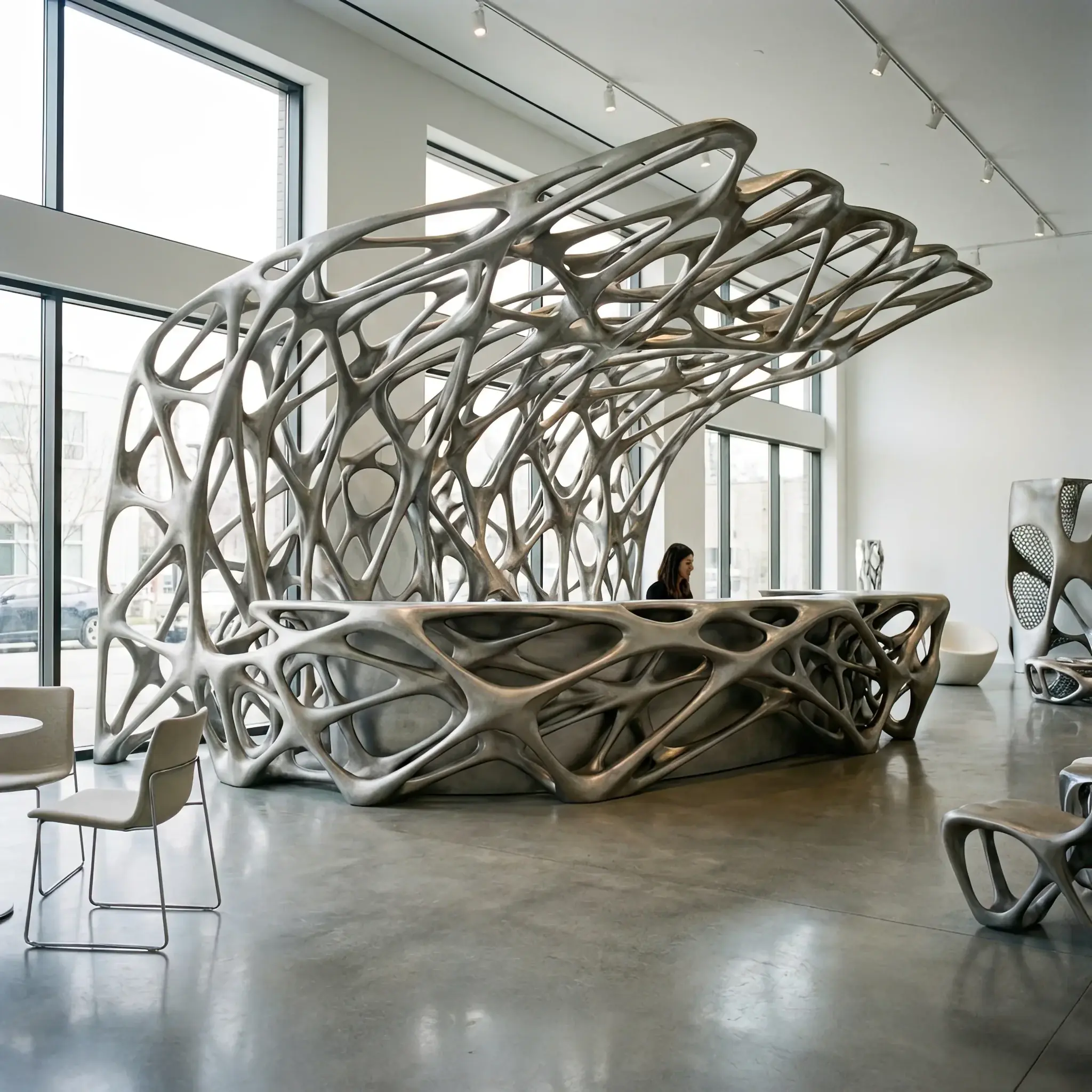
Traditional architecture has always been a dead shell. In our 2026 projects, we are implementing 'living nodes.' A reception desk can be grown from mushroom mycelium, which possesses unique acoustic and strength properties. Walls are covered with microalgae-based bio-reactors that actively absorb CO2 and release oxygen. This creates an atmosphere in the lobby similar to a mountain forest, filled with the purest air—which is instantly perceived by visitors as the ultimate sign of care and premium status.
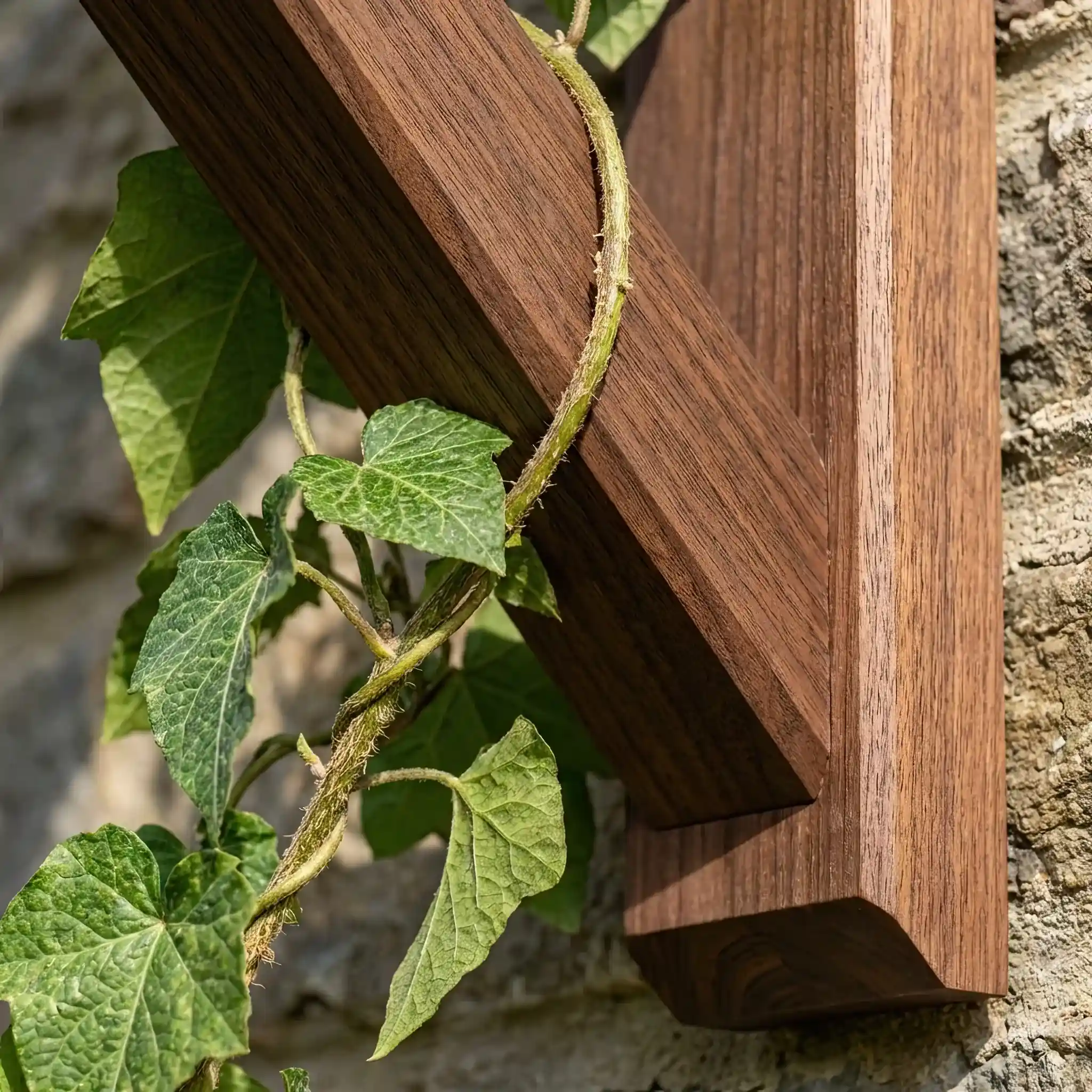
Bio-Reactors in Glazing: Energy and Oxygen
Photosynthesis as a design element
We integrate thin algae aquariums directly into facade systems. By day, they function as a natural light filter, changing transparency depending on solar intensity. By night, these panels can emit a soft bioluminescent glow, lighting the lobby without a single electric bulb. This is not only beautiful but also efficient: the biomass from the reactors can be used as fertilizer for internal gardens or processed into biopolymers for office needs.