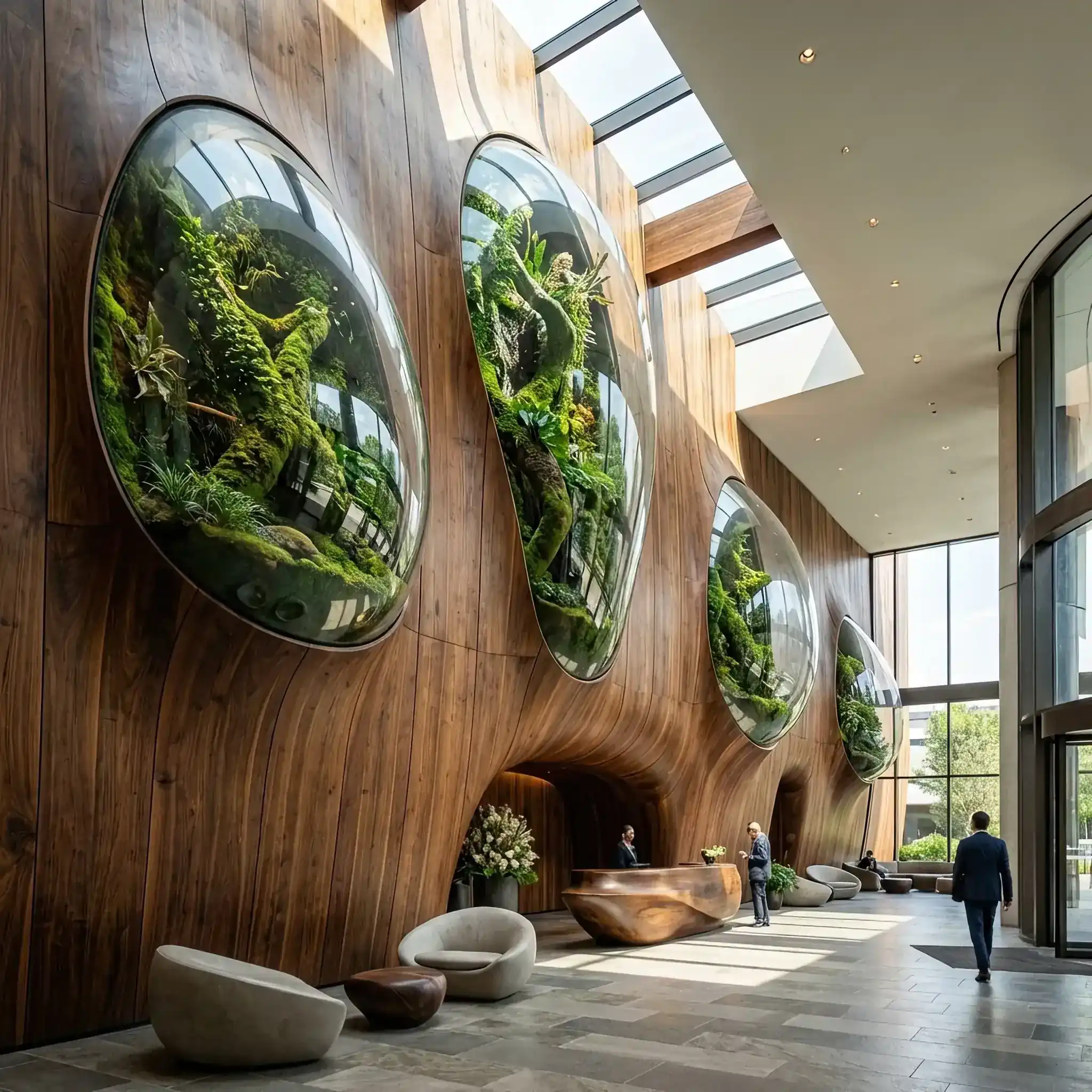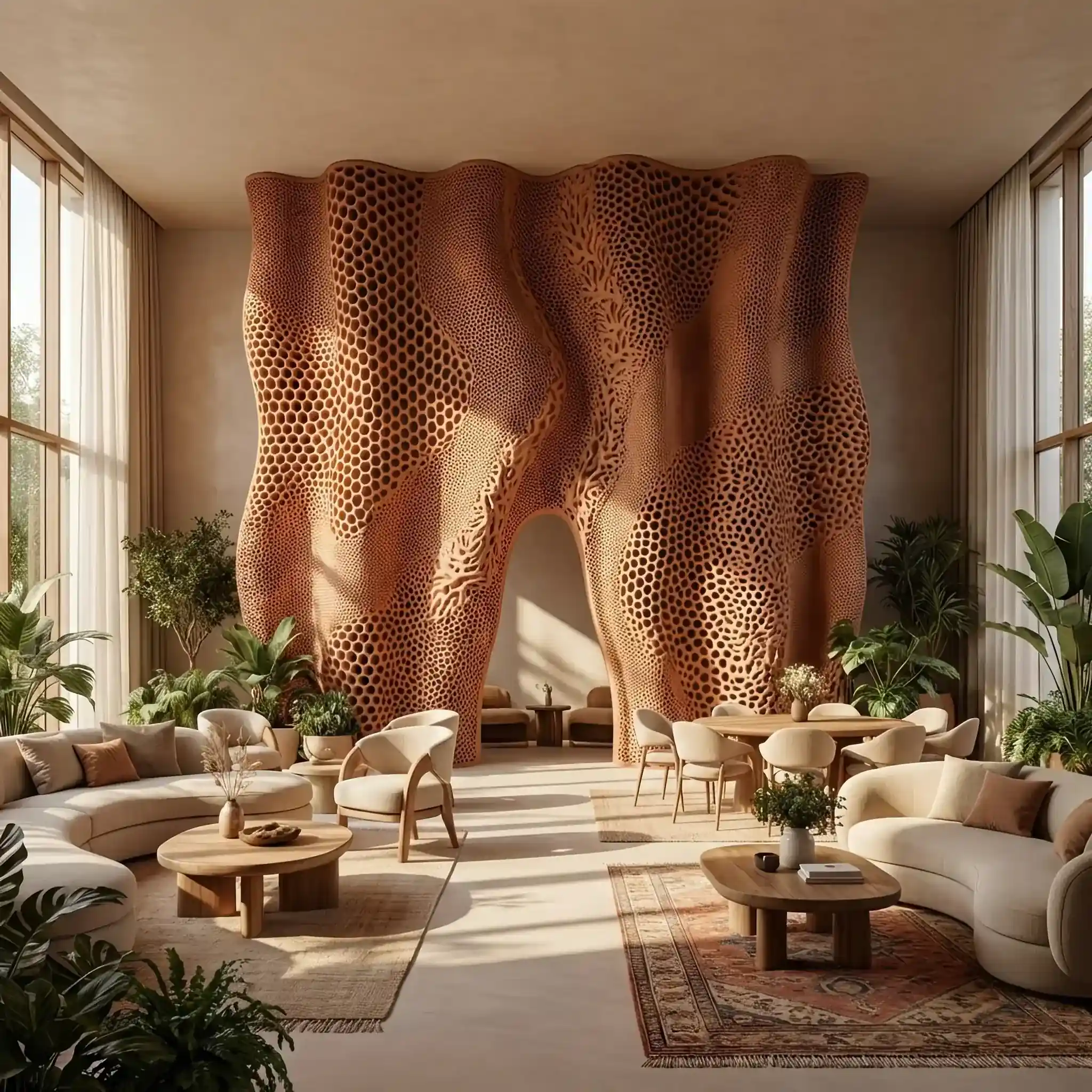
In 2026, we are returning to the most ancient materials using the technologies of the future. We present 3D-Printed Clay—a technology for creating modular partitions and art objects with incredible geometry. At Reception Space, we use this method to create 'breathing' walls that regulate humidity and create a unique tactile atmosphere. This is sustainability raised to the power of high technology. We examine why clay is becoming the main competitor to plastic and concrete in lobby interiors.
Digital Ceramics: The Creation Process
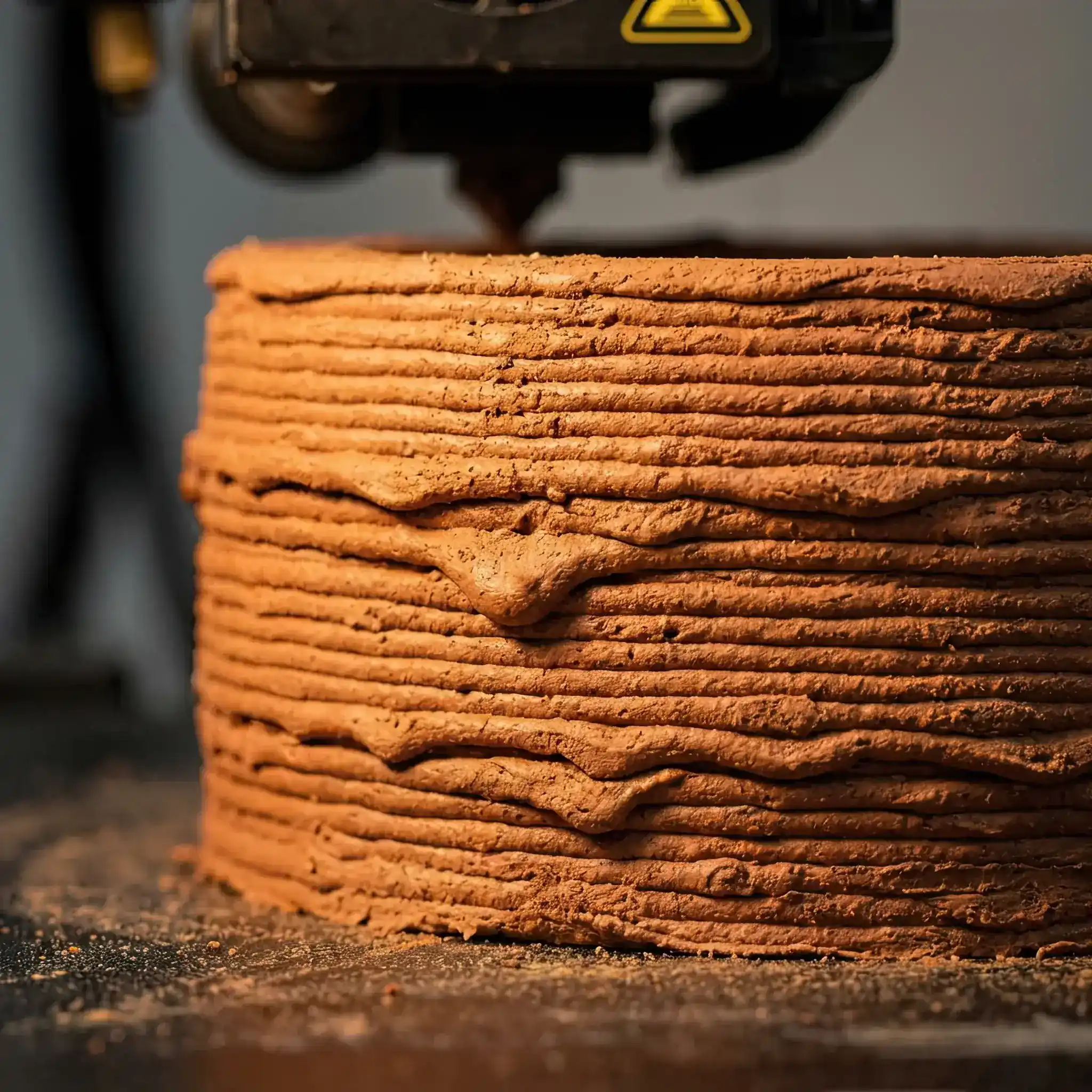
3D-printing with clay in 2026 is additive manufacturing where a robot applies a specially prepared ceramic mass layer by layer according to a set algorithm. This allows the creation of structures with internal voids and openwork patterns that are impossible to obtain by casting or sculpting. After printing, the modules undergo careful drying and firing. The result is a unique object with a living texture and precision to the millimeter. At Reception Space, we design these walls as a central lobby element, uniting nature and code.
Breathing Walls: Natural Climate Control
Hygroscopicity as functionality
Natural clay has the unique ability to absorb excess moisture from the air and release it when the room becomes too dry. In 2026, lobbies with clay partitions from Reception Space do not need powerful humidifiers. The complex shape of the printed modules increases the surface area in contact with the air, working as a passive climate controller. Guests immediately feel the difference: the air in such a space feels fresher and softer.